
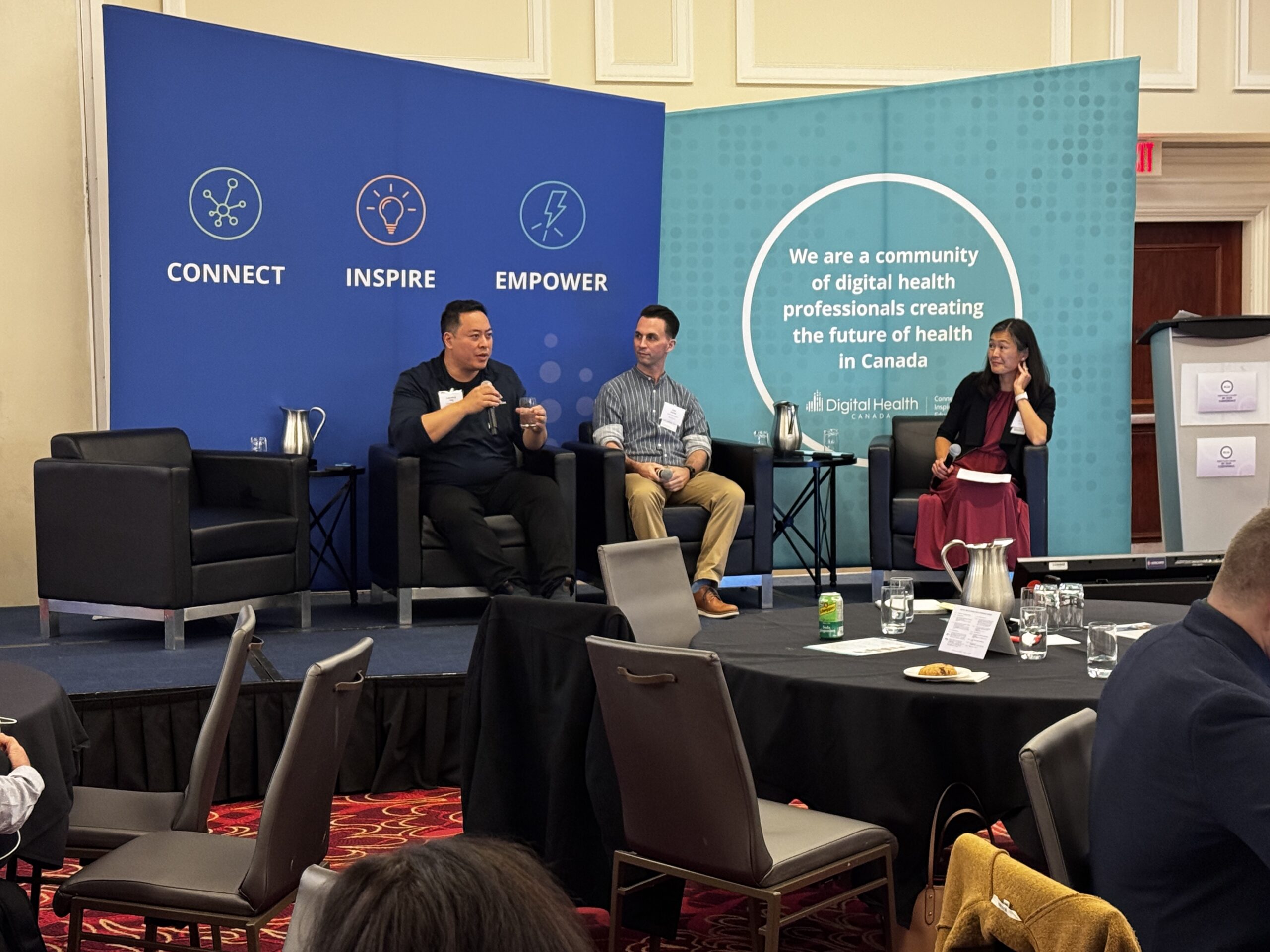
More than 165 people gathered at the Pinnacle Hotel Harbourfront on February 6 for BC26, a busy day of networking and discussions focused on patient-centred, data-driven digital health.
Opening keynote Claire Snyman (Health Care Advocate, Two Steps Forward), presented Built With Patients: Digital Health That Earns Trust and Improves Care. Claire connected her lived experience with digital health practice to show why digital health solutions must be designed with patients, families, and caregivers to truly earn trust and improve care.
Technology-Enabled Care at Home: Practical Models for Supporting Seniors, presented by Derrick Bernardo and Glenn Maxwell (Broadmead Care) with Ian Rongve (Assistant Deputy Minister, Ministry of Health) showcased practical long-term-care-at-home models that support seniors in living safely and independently, while easing pressure on traditional long-term care systems. Grounded in real examples from British Columbia, the discussion highlighted patient experience and the measurable impact on quality of life, long-term care waitlists, and system capacity.

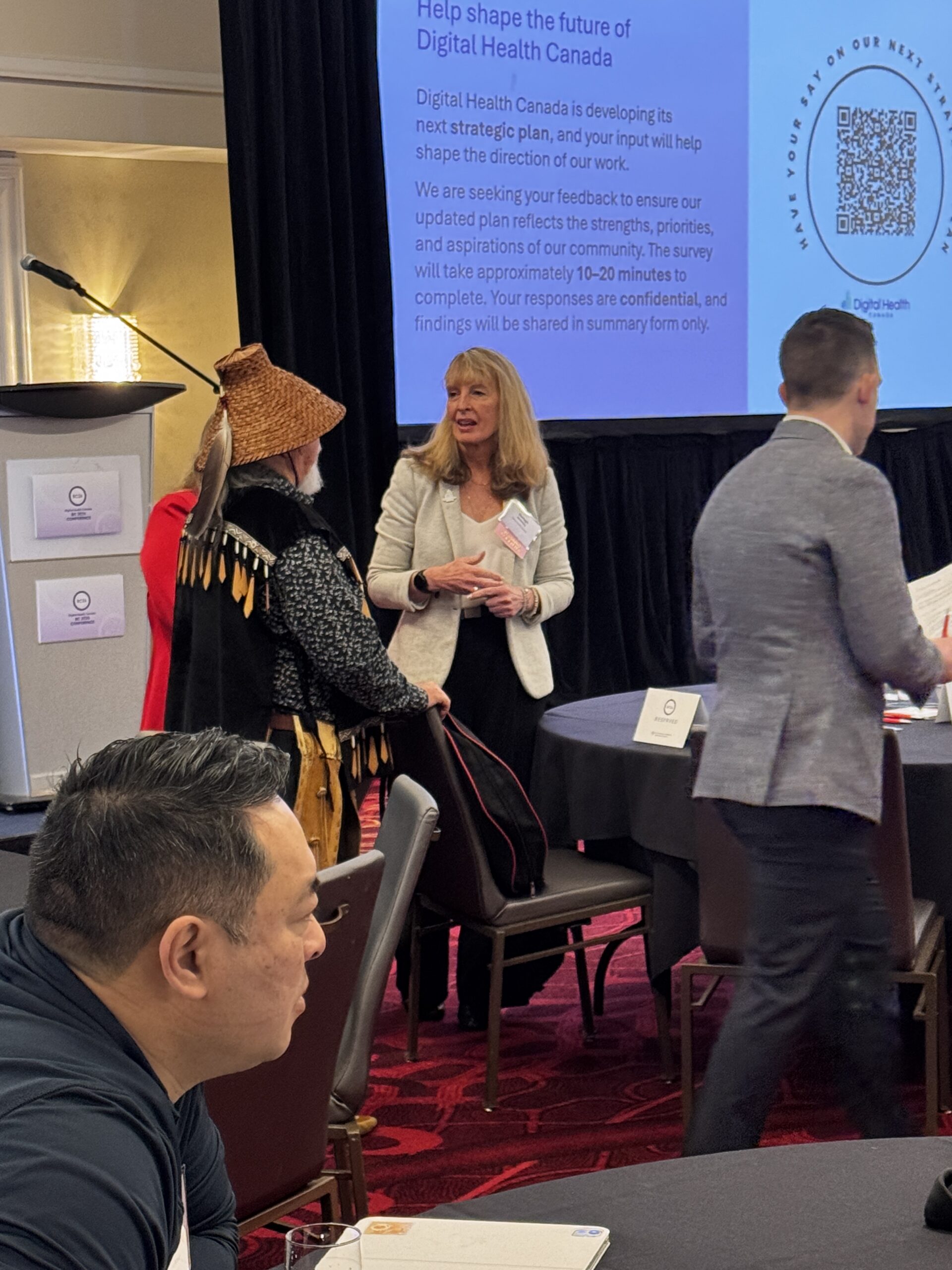

Monique Rasmussen (Providence Health Care) and Juliana Wu (CIHI) presented Unlocking the Potential of Canada’s Hospital Data: Enabling Timely Insights and Innovation. This session explored CIHI’s vision for near real-time, fit-for-purpose hospital data flows; how collaboration across the hospital sector is enabling innovation; and insights on how AI-assisted coding can improve data timeliness and quality, reduce administrative burden, and support coders in focusing on more complex and value-added work.
Bridging the Gaps: Connecting Practices, Communities & Care in BC’s Digital Era featured Dr. Baldev Sanghera MD, CCFP (Doctors of BC President-Elect) and Dr. Jaron Easterbrook (Family Practice Services Committee) exploring the intersection of care delivery, technology, and system-wide alignment in British Columbia underscoring the importance of breaking down silos to better connect practices, communities, and systems. The discussion was moderatined by Elliot Desilets (Petal Health).
I particularly enjoyed the table discussions comparing how different provinces approach digital health – from governance to systems supporting care delivery and people’s experience in the health system. – Nithya V.
Health Data Coalition (HDC) empowers family physicians and nurse practitioners by putting meaningful clinical data in their hands. Through the HDC Discover application, providers gain insights into their patient populations, identify strengths, and uncover opportunities to improve care. In family medicine, data is more than numbers—it represents relationships with known people and their stories, often with life-changing outcomes. HDC Discover offers over 400 practice measures, aggregated at individual, clinic, community, regional, and provincial levels. Users can compare trends across groups, visualize their impact, and see how collective efforts drive better patient outcomes. In this session—Connecting Practices, Communities + Care: The Power of Shared Primary Care Data—Gayle Grout, Dr. Cole Stanley, and Dr. Lawrence Yang of Health Data Coalition shared how primary care data connects practices, strengthens communities and transforms care delivery.
Dr. Angel Arnaout (Chief Medical Informatics Officer, PHSA), spotlighted the Bring Your Own AI (BYOAI) era in healthcare, highlighting the BC SCRIBE Trial, a first-of-its-kind, multi-vendor evaluation of ambient AI scribes designed to provide a governed alternative to unmanaged BYOAI.
The day concluded with a compelling closing keynote from Cynthia Johansen (Deputy Minister, Ministry of Health), who spoke to system-level challenges and the government’s commitment to addressing both the opportunities and complexities ahead in advancing digital health in British Columbia.